
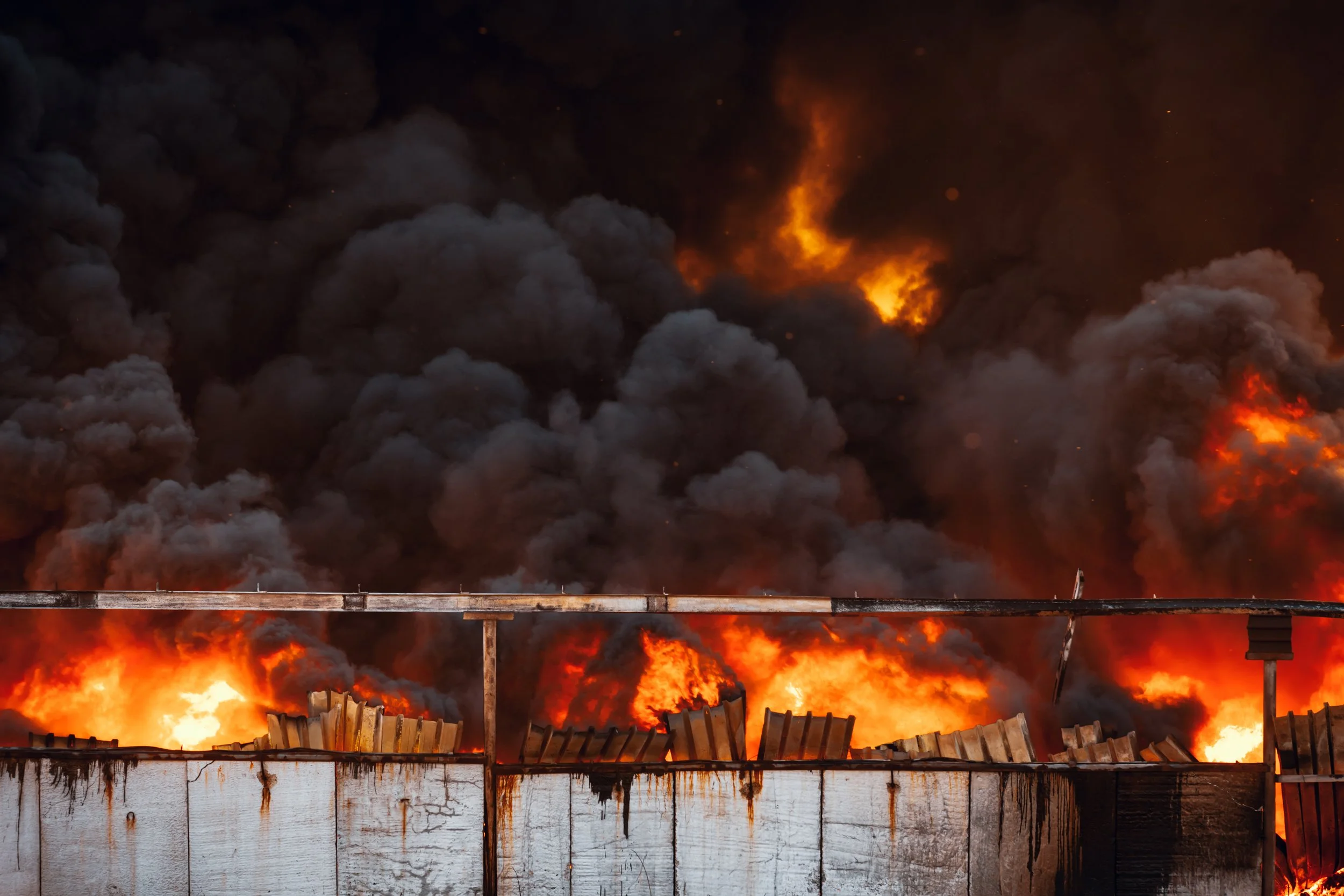
BATTERY FIRES
IN THE WASTE INDUSTRY
In July 2020, a fire at Calleja’s Altona Transfer Station site occurred when a small lithium-ion battery entered the waste stream. The fire and it’s source were quickly identified and brought under control by the FRV and staff.
This incident, along with many others across the waste industry, prompted the Calleja Group to convene a forum on the issue to present, discuss and asses the risks and recommend and implement protocols to mitigate the dangers in the immediate, short and long term.
The Battery Fires in the Waste Industry - Understanding Battery Fire Risks Forum took place in Melbourne on Tuesday, 17 February at the RACV City Club. it brought together transport operators, recyclers, councils, and emergency services in Melbourne to tackle the escalating lithium-ion battery fire crisis.
KEYNOTE SPEAKERS
Dr Adam Best from CSIRO provided a technical overview of lithium-ion battery risks, failure mechanisms and emerging solutions to improve detection and safety.
Katharine Hole from Australian Battery Recycling Initiative outlined the role of stewardship, safe recycling pathways and national coordination in reducing battery fire risks.
Suzanne Toumbourou from the Australian Council of Recyclers (ACOR) highlighted the need for system-wide reform, including stronger policy alignment and industry accountability.
Luke Stephens from FRV shared frontline emergency response insights, including fire behaviour, incident trends and operational challenges.
Libby Chaplin, CEO of the Battery Stewardship Council, outlined the role of the battery stewardship scheme, highlighting key challenges and
BANNED FROM LANDFILL - STILL EVERYWHERE
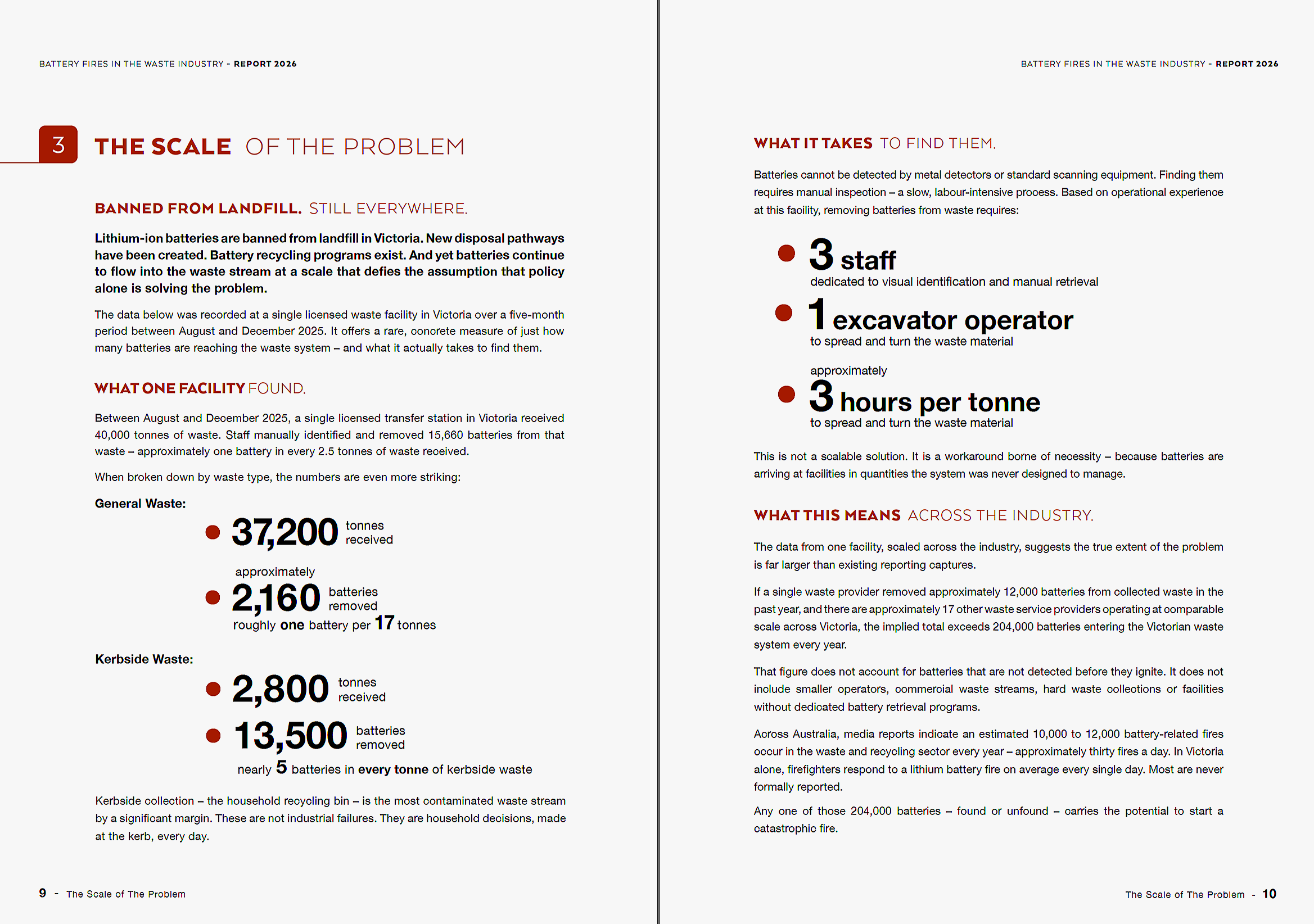
Lithium-ion batteries are banned from landfill in Victoria. New disposal pathways have been created. Battery recycling programs exist. And yet batteries continue to flow into the waste stream at a scale that defies the assumption that policy alone is solving the problem.
The data below was recorded at a single licensed waste facility in Victoria over a five-month period between August and December 2025. It offers a rare, concrete measure of just how many batteries are reaching the waste system – and what it actually takes to find them.
WHAT ONE FACILITY FOUND
Between August and December 2025, a single licensed transfer station in Victoria received 40,000 tonnes of waste.
Staff manually identified and removed 15,660 batteries from that waste –
approximately one battery in every 2.5 tonnes of waste received.
DOWNLOAD THE REPORT
The Report brings much needed attention and to this growing but preventable risk. The scale, consistency and urgency of what was heard across six workshop groups makes one thing clear: the sector cannot manage this issue in isolation, and incremental responses are no longer sufficient.
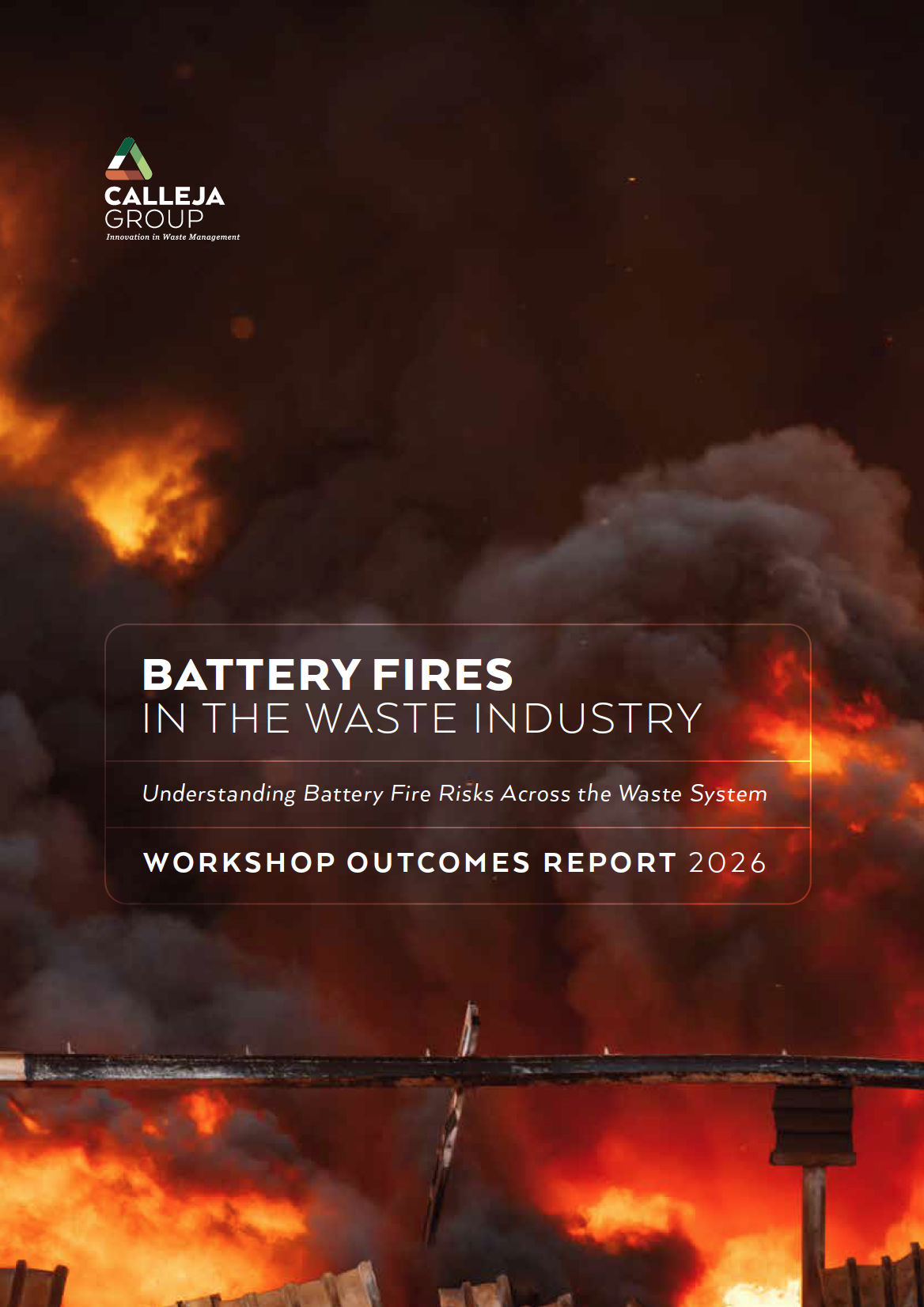
The Report is free to download. Click on the cover image below to download your copy.
Join The Working Group
To enquire about joining the Battery Fires Working Group, or more information, just click the button at right.